현대 모터스튜디오 서울
현대 모터스튜디오 서울
Experience
Moving from the 5th floor to the 1st floor of Hyundai Motorstudio Seoul, this exhibition explores the various traces of Pony's timeline and Pony's heritage that continues to the present. Take a look at where we came from and where we need to go in the future.
-
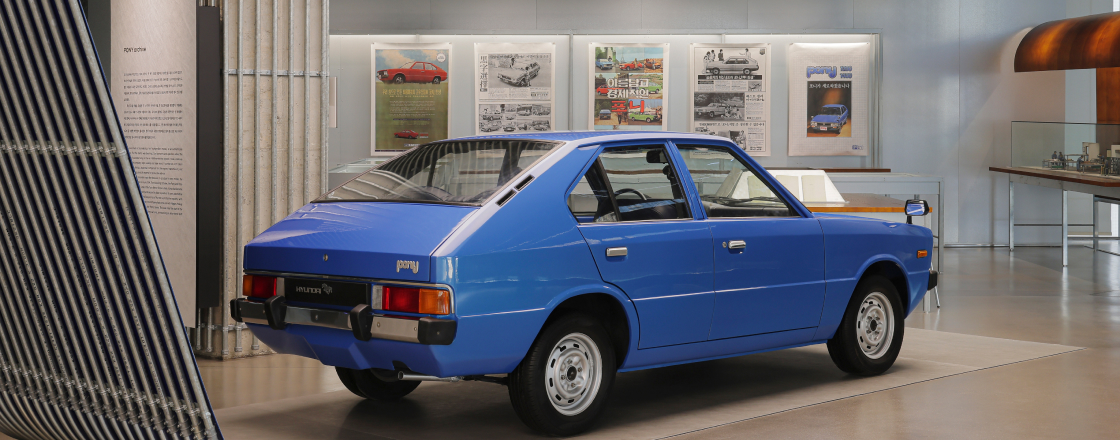

- 0 PONY, the timeless
-
The Pony first came into this world in 1974. As ‘the first independent model (Uniquely Korean-made)’, the change it brought for Korean households and their general lifestyle was in technicolor. In a bullish era where every other Korean home was eager to acquire a car of their own, the Pony became a household name, writing a new chapter in everyday family lives, leisure activities, and automobile culture. The idea of creating the Pony came from a simple need for a ‘non-foreign car’ to cruise on the new Gyeongbu Expressway that connects Seoul to Busan. However, the Pony delivered a far more dazzling narrative than that. It has been said that a car is not just a car – a car has a lot to reveal about how we live, how we create and what we value. Looking into the Pony’s narrative and its bold expansions, we can see how much things have changed.
In the timeline of the Pony, traces of challenges toward the new are clearly marked. At the time, economic affluence and diversity were sprouting in the social and cultural landscape. But what does it mean to reminisce such bygone changes from here and now? If heritage is ‘a prophecy that tells us where to go by showing us where we came from and how we came about,’ then the Pony would be an excellent example of such heritage. The time of the Pony continues to this day, breathing the legacy of overcoming realistic difficulties and passing on a better life for humanity. Fueled by these moments, the time of the Pony continues to progress, extending its reach towards the future that lies ahead.
PONY, the timeless
06. 09. 2023 ~ 10. 08. 2023
Hyundai Motorstudio Seoul
09:00 ~ 21:00 (Closed on the first Monday of every month)
-


- 1 7080 age
-
The 1970s were a period when the two central forces of industrialization and modernization were truly making their presence felt in Korea. Koreans witnessed a glittering ‘Miracle on the Han River’ that represented a homegrown version of West Germany’s ‘Miracle on the Rhine.’ As national income per capita exceeded the global average, the country found itself among the ranks of middle-income economies, and revolutionary changes took place across the nation, reshaping land, roads, and urban spaces. This was the period when the push for ‘Made in Korea’ also gained momentum. Through imitation and adaptation, Korea sought to create its own domestic versions of automobiles, electronics, popular music, comics, and more. The supply of television and apartments, which went on at an astonishing rate, were cultural symbols of this period. The glory enjoyed by the “trot” genre in the years after the Korean War gave way to folk singers representing the country’s youth culture; Korean rock announced its arrival through the work of guitarist Shin Joong-hyun. In cinema, wanderings and romanticism of the youth were beautifully captured on screen by films such as The March of Fools, A Fine, Windy Day, and Whale Hunting. Established in 1976, the Magazine Deep Rooted Tree was the first to use pure Korean script in its titles and employ horizontal printing, which contributed to making it the most subscribed magazine in Korea. Economic growth and rise in exports never seemed to cease. Cars roamed the streeets, which were considered luxury and a privilege even until the 1970s. Golden hits such as Cho Young-pil’s song “Bobbed Hair” played alongside Hyundai Ponys, and “my car” and “owner driver” were the most widely used words by everyone.
-
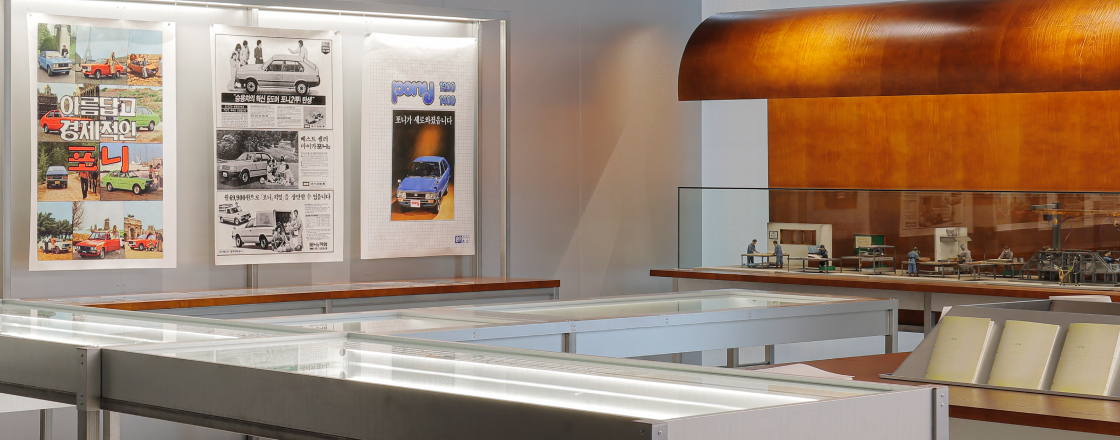
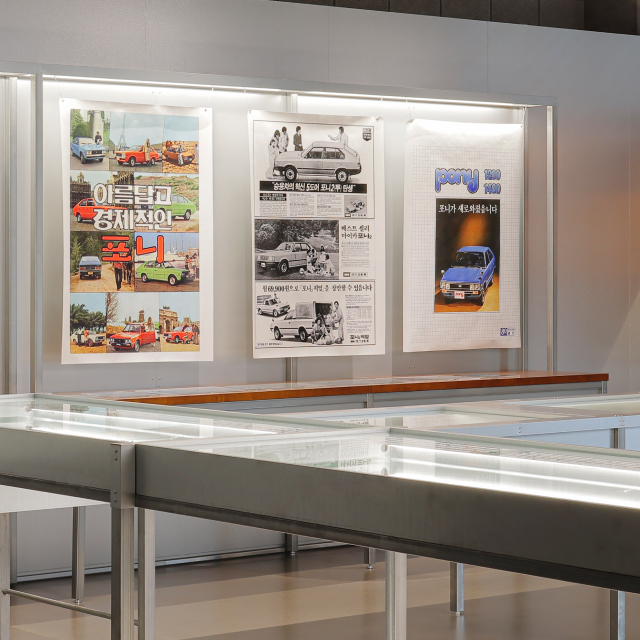
- 2 PONY archive
-
Grand vision lied in the making of an ‘independent model,’ or an authentically Korean car. But the reality was daunting. Cost concerns and questions about the likelihood of success hung in the air. While everyone agreed it was a reckless endeavor, the company kept seeking out new ways. It partnered with Italian companies for design, Japanese companies of the engine, transmission, and molding technology, and UK experts for production advice.
One year after Hyundai made the decision to produce its own model, the first prototype was born in June 1974. The following October, the Pony and Pony Coupe appeared side by side at the Turin Motor show in Italy. Korea had become the ninth country in the world and second in Asia to produce its own automobile model. This also marked the beginning of Korean automobile exports, with Ecuador as the first market. Soon, the company had come out with wagon, pickup and hatchback lines, all bearing the ‘Pony name. This was truly the start of the ‘Pony archive,’ a vanguard of the ‘my car’ era, announcing an auto-trend shift toward compact car models in Korea.
-

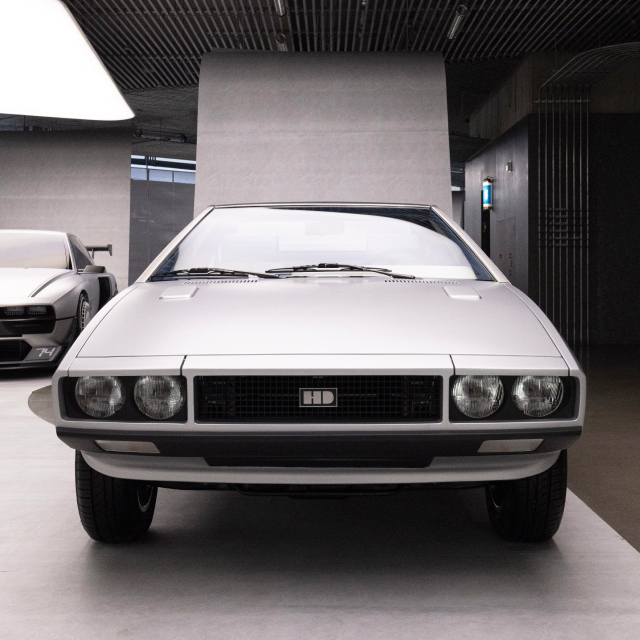
- 3 Design heritage
-
Deyan Sudjic, director of the Design Museum in London, wrote that “the car is the ultimate expression of modern design and industrial culture.” Indeed, it is difficult to think of any other consumer product equaling the automobile in embodying the texture and shaped of the ‘modern feel.’ This was the result of applying the more vivid language of design to something that was once strictly functional.
European automobile designers – especially the Italian carrozzeria (automotive design specialists) – built brilliant careers and created masterpieces as they blended unique production approaches with artistic designs. A prominent example is Giorgetto Giugiaro, who was voted the “best car designer of the 20th century” by automotive journalists. After setting a high aesthetic standard with the Volkswagen Golf, he designed the Lotus Esprit, BMW M1, and DeLoreanDMC-12, shifting the focus of auto-design from curves and arcs to straight lines and flat surfaces.
The Pony and Pony Coupe designs were also conceived by Giugiaro around the same period. When the Pony Coupe was unveiled at the 1974 Turin Motor Show, it drew attention with the design elements such as its wedge-shaped nose, circular headlights, and geometric lines that resembled a folded piece of paper. Giugiaro said that “Anyone can draw a car. But that’s it, it’s just a drawing unless you think about what the engineers have to do to make it real.” His design was simple and clear. This is one of the reasons that his car designs, which encompass a wide range of sized and genres, have been invoked across the hurdles of time.
-
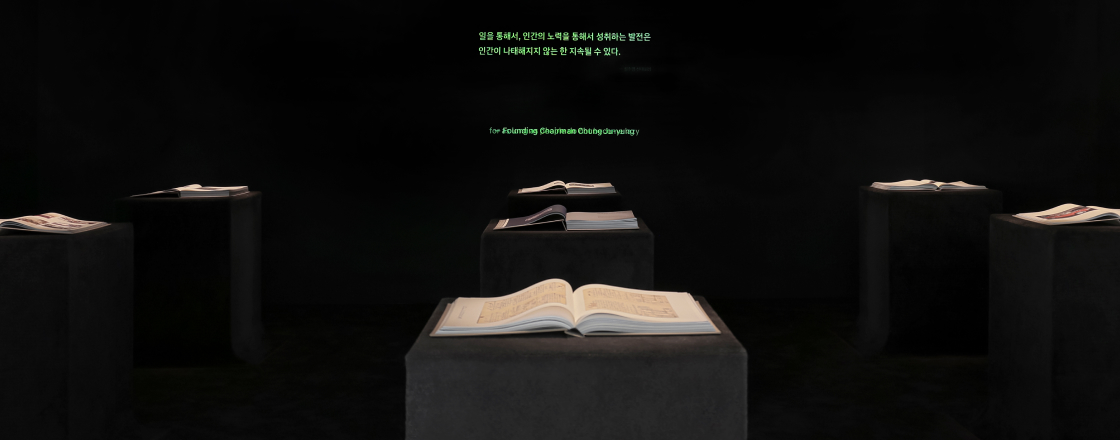

- 4 Humanity
-
‘The very first family car’ – these words are shared by roughly ten out of ten people remembering the Pony. This is why memories of the Pony in faded color photographs are recalled as a ‘family event,’ Sons remember how their father sneakily placed their hand on the trembling gear stick while waiting at a red light. Some remember the early mornings when their mothers would drive down the bustling streets with ease to work. For others, the car was their small playground. Sitting in the unlocked driver’s seat, gripping the steering wheel and turning on the lights and fiddling with the radio volume just like their parents used to.
Like the means of transportation it was, the Pony left memories on the road that were warn and pleasant to the touch. Modestly sixed Pony cars were there on the road; by Gyeongju’s Bomun Lake with the cherry blossoms in full bloom; on the national roads taking honeymooners up the slopes of Jeju island; in front of the Nonsan training center as families dropped their sons off for their first day of military service; at the highway rest areas where travelers would take a brief rest while returning home for major holidays; and in the background of family photographs, taken next to houses that did not have parking spaces of their own. In these images, the humanistic spirit of the Founding Chairman Chung Ju-yung is also captured, who hoped the production of Pony might contribute to making people’s lives a little bit better.